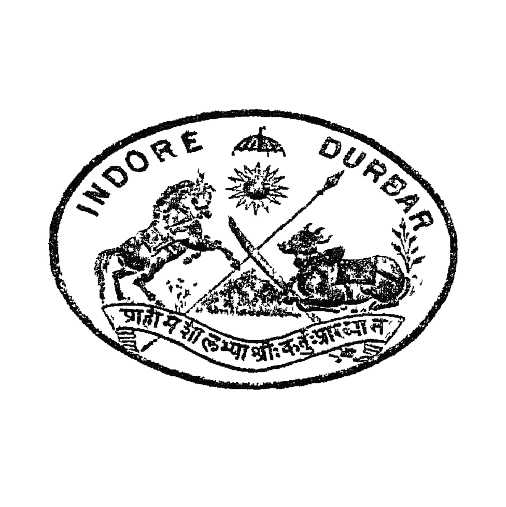

Overview
Browse our visual respository!
Indore - Visual RepositoryIndore (Holkar State)
- Last King: Maharaja Yashwant Rao Holkar II
- Size: ~24,190 km²
- Population: ~15 lakhs (1941 Census)
- Accession to India: 11 August 1947
- Post-Independence Union: United State of Gwalior-Indore-Malwa (Madhya Bharat), which later became part of modern-day Madhya Pradesh
Background
In the 1920s, the Holkar Durbar established the 1925 Legislative Committee and local municipal boards to present an image of modern governance. In practice, these institutions functioned as consultative facades with irregular meetings and no real influence over administration; the Maharaja retained absolute executive control. British paramountcy intervened only to depose rulers over administrative failure or personal scandals (as seen in 1903 and 1926), rather than to support democratic rights from below.
The people’s demands
This autocratic structure led local organizers to form the Indore Praja Mandal during the initial wave of princely state associations. The movement campaigned for basic civil liberties, elected assemblies, an independent judiciary, and the separation of the ruler's personal privy purse from general state revenues. Activism grew through the 1930s and expanded rapidly after the Indian National Congress officially endorsed the struggles of princely state subjects in December 1938.
Maharaja Yashwant Rao Holkar II continued to resist democratic power-sharing, relying on foreign advisers such as his English prime minister, Ralph Horton. Mass unrest peaked during the 1942 Quit India movement, when local student groups and textile mill workers coordinated citywide strikes and street protests.
Merger with the Indian Union
By 1947, the administration could no longer withstand internal pressure. Lord Mountbatten warned the Maharaja that failing to accede would cause his own subjects to depose him by force. Yashwant Rao signed the Instrument of Accession on 11 August 1947, while rejecting conservative confederation schemes meant to preserve royal rule. Decisive Praja Mandal street agitations in 1948 finally forced the Holkar administration to transfer executive authority to an elected legislature, completing Indore's integration into the newly formed Madhya Bharat union.